
Short-field techniques: getting in and out of grass strips safely
Fly Synthesis Storch pilots know that a 400-meter grass strip with trees at both ends demands precision. The Rotax 912ULS delivers around 100 hp yet the aircraft’s microlight heritage keeps it at 472.5 kg maximum takeoff mass, giving strong short-field numbers when the pilot flies the book. Performance planning starts with the POH: at sea level and 15 °C the Storch clears a 50 ft obstacle in 280 m on takeoff and lands in 220 m. Add 15 % for every 1 000 ft of density altitude, another 20 % for wet grass, and 10 % for a 2 % upslope. These margins turn theoretical figures into real safety buffers that Texan owners also apply on similar back-country strips across the Italian Prealps.
Short-field technique differs from soft-field. Short-field demands maximum performance with brakes held until full power and best-angle climb at Vx. Soft-field focuses on minimizing propeller strike and wheel drag by lifting the nose early. On a dry, firm grass strip shorter than 500 m the short-field method wins. Pilots who confuse the two often float past their intended touchdown point or climb too shallow over obstacles. Fly Synthesis manuals emphasize nailing the correct speed schedule every time.
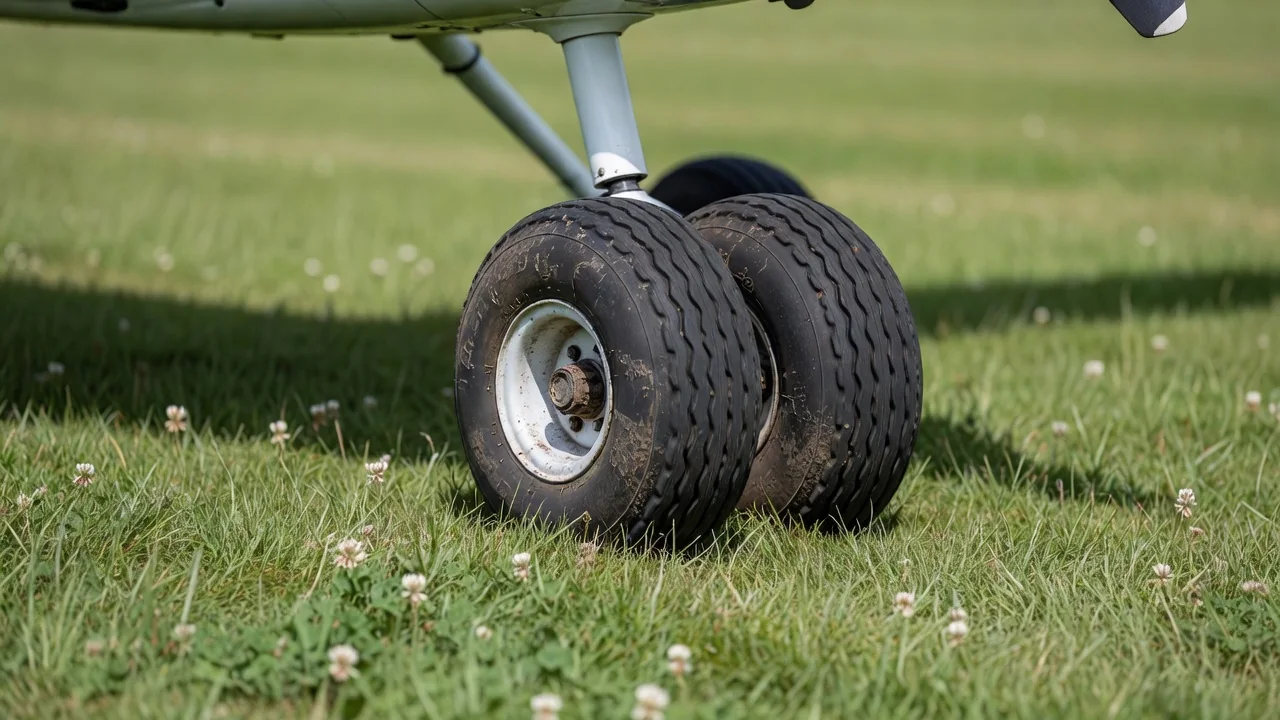
Performance Planning on Grass
Begin every flight with density altitude calculation using the Rotax 912 series chart. At 2 000 ft density altitude and 25 °C the Storch’s takeoff distance over 50 ft grows to 420 m. Factor in 15 cm wet grass by adding 25 % more distance. Slope adds or subtracts roughly 10 % per degree. Owners who ignore these corrections regularly run out of runway. Write the adjusted distances on your kneeboard and treat them as hard limits rather than suggestions.
Short-Field Takeoff Technique
Align on the very threshold, hold brakes, run the Rotax 912 to full power and release. Rotate at 55 km/h indicated and climb at 72 km/h, the best-angle speed published for the Storch with full-span flaperons at 15°. This attitude clears obstacles cleanly but demands absolute heading control. Any bank reduces climb gradient dramatically. Maintain coordinated flight and let the aircraft settle on 85 km/h once obstacles are cleared to achieve best-rate climb.
Approach Speed Discipline
Fly every approach at precisely 1.3 times stall speed with full flaps. For the Texan that means 68 km/h at typical landing weight. Faster speeds destroy the short-field capability that attracted pilots to these aircraft in the first place. Excess speed on a 350 m strip guarantees floating past the aim point and into rougher grass or worse. Trim the aircraft so that reducing power produces a steady 500 ft/min descent at that exact speed. Deviations larger than 5 km/h require an immediate go-around.
Using Flaperons and Flaps Effectively
The Fly Synthesis Storch uses full-span flaperons that droop 30° for landing. This configuration lowers stall speed to 52 km/h but also increases drag. Deploy them only on final after the aircraft is slowed to 85 km/h. Early deployment creates a large pitch change that can surprise pilots on their first grass-strip seasons. The Texan’s blown-flap system works differently, directing propeller slipstream across the flaps for extra lift at low speed. Both designs reward precise speed control rather than brute-force power.
Touchdown, Braking and Go-Around Decisions
Touch down at minimum speed on the main wheels first, then lower the tail. On grass, heavy braking can flip the aircraft if applied too early while the wings still produce lift. Use aerodynamic braking and light wheel braking only after the tail is down. The go-around decision point is 100 m from the threshold or 50 ft height, whichever comes first. Beyond that point, continuing with excess speed or a bounced landing has caused most documented strip accidents in the ultralight community.
Risks, Limits and Common Mistakes
Most short grass-strip accidents stem from two habits: carrying extra approach speed “for safety” and delaying the go-around decision. At 1.5 times stall speed instead of 1.3 the landing distance can increase by 40 %. Late go-arounds on the Storch with full flaperons require immediate flap retraction to 15° while applying full power, yet many pilots freeze. The 2000-hour TBO of the Rotax 912 family is only achieved when pilots respect the aircraft’s limits. Overconfidence after 50 smooth landings often precedes the incident that bends metal.
- Always calculate density altitude before planning a short grass takeoff or landing.
- Use exactly 1.3 times stall speed on final approach with full flaps set.
- Commit to go-around no later than 100 m from the threshold if speed or height is wrong.
- Hold brakes until full power on short-field takeoffs to maximize acceleration.
- Climb at published best-angle speed until obstacles are cleared by at least 50 ft.
- Touch down on the mains first and avoid heavy braking until the tail is down.
| Condition | Takeoff over 50 ft (m) | Landing from 50 ft (m) | Margin Applied |
|---|---|---|---|
| Sea level, dry grass | 280 | 220 | 0 % |
| 2 000 ft DA, 25 °C | 420 | 310 | +50 % |
| Wet grass, 2 % slope | 510 | 380 | +35 % |
| Max weight, 30 °C | 580 | 440 | +60 % |
| Conservative pilot limit | 650 | 500 | Runway min |
Master these numbers and procedures and your Fly Synthesis Storch or Texan becomes a reliable back-country machine instead of a runway-limited toy. Fly the speeds, respect the margins, and the short grass strips will remain welcoming rather than hazardous.