
Composite aircraft maintenance: the owner's handbook
Composite construction — glass, carbon and Kevlar fabrics laminated with aerospace resins — is now the standard for high-end ultralights, and for good reason: the strength-to-weight ratio beats any traditional material, the aerodynamic surfaces stay smooth for decades, and in a crash the laminate absorbs far more kinetic energy than aluminium or wood. But composites ask for a different maintenance mindset than the metal aircraft many mechanics grew up with. This guide covers what owners need to know.
Understand what you own
A composite airframe is a fabric impregnated with resin, often stiffened with foam or Nomex honeycomb cores. The outer gelcoat is not paint — it is an integral part of the structure, sprayed into the mould before lamination. That is why certification testing for composite structures is more severe than for wood or metal, and why a well-kept composite airframe shows almost no corrosion or fatigue: the enemies are different ones, chiefly ultraviolet light, moisture in sandwich cores, impact damage and bad repairs.
| Interval | Composite airframe tasks |
|---|---|
| Every pre-flight | Skin and control-surface visual check, hinges, fasteners, gelcoat cracks |
| 50 hours | Detailed skin inspection, control free-play, landing gear attach points |
| Annual / 100 hours | Tap test of suspect areas, torque checks, cable tensions, upholstery and canopy |
| Every 2–5 years | Gelcoat polish and UV protection, canopy polish, bearing replacements as required |
Inspection: finding what you cannot see
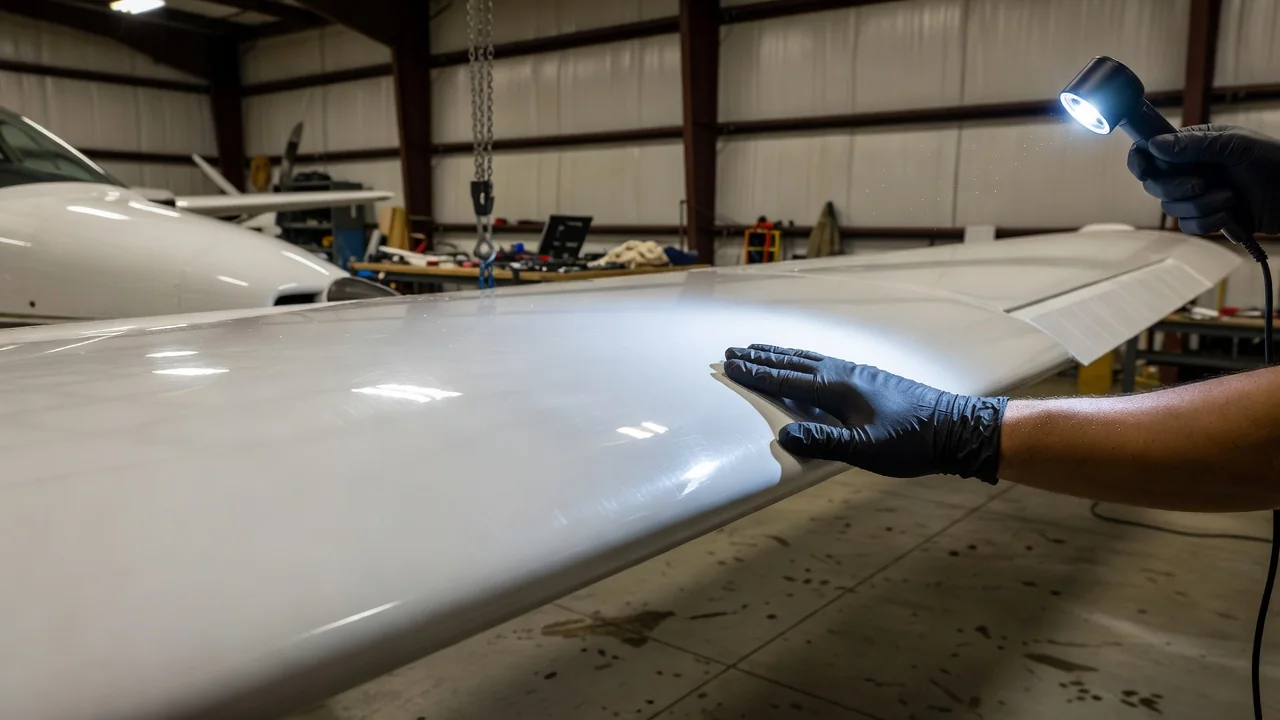
The classic composite inspection tool is the tap test: a light coin or phenolic hammer tapped along the skin produces a sharp ring on healthy laminate and a dull thud over delamination or waterlogged core. Mark suspect areas with low-tack tape and have them evaluated — small delaminations grow under vibration. Pay special attention to control-surface balance after any repair: an out-of-balance elevator or aileron is a flutter risk, and flutter in a light aircraft is not survivable. Canopies craze and scratch; use only approved plastic polishes, never household glass cleaner, which attacks acrylic.
Protection: hangar, cover, cleanliness
UV is the composite airframe's slow enemy. A hangar is the single best investment in airframe life; if the aircraft must live outside, use breathable full covers and refresh the gelcoat's protective polish on schedule. Wash with mild soap, avoid aggressive solvents near the laminate, and never pressure-wash at close range — water forced into a sandwich panel can add kilograms and start freeze-thaw damage. In cold climates, fuel-vent and pitot checks matter doubly, because blocked drains trap condensation inside wing structures.
Repairs and the engine
Composite repair is a craft: scarf the damaged laminate, rebuild layer by layer with the correct fabric and resin, cure at controlled temperature, and rebalance the surface. Manufacturers publish structural repair manuals and service bulletins for a reason — follow them, and have anything beyond cosmetic gelcoat work done or signed off by someone with composite experience. The engine is a separate world: most of the fleet runs Rotax two- or four-strokes, with their own 100-hour and calendar schedules, gearbox inspections and the five-year rubber replacement for hoses and carburetor sockets. Treat airframe and engine as two maintenance programmes running in parallel, keep the logbooks honest, and a composite ultralight will still look — and fly — like new at thirty years old.