
Catalina NG: the composite amphibian that lands on water and grass
The Fly Synthesis Catalina NG stands out as a versatile composite amphibian designed for both water and grass operations. Built in Italy with a carbon-fiber hull and high-wing configuration, this microlight-class aircraft features retractable tricycle landing gear that tucks neatly into sponsons. Powered typically by a Rotax 912 UL or 912 iS engine delivering 80 to 100 hp, the Catalina NG offers a maximum takeoff weight of 600 kg in the LSA category while maintaining the heritage microlight empty weight around 450 kg. Pilots appreciate its 1,200 km range and 185 km/h cruise speed, making weekend escapes to remote Alpine lakes entirely practical.
Water handling demands a different mindset than runway flying. Step taxiing keeps the hull planing at low speed to minimize drag, while glassy water landings require careful judgment of height because the mirror-like surface hides depth. Reading wind on water involves watching ripples, flags on distant shores, and smoke from lakeside chimneys. The Catalina NG’s hull is shaped for clean entry, yet pilots must master the precise power and attitude combination that prevents porpoising on touchdown. Approach speed is held at 1.3 times stall speed, typically 65 km/h, for both water and turf.
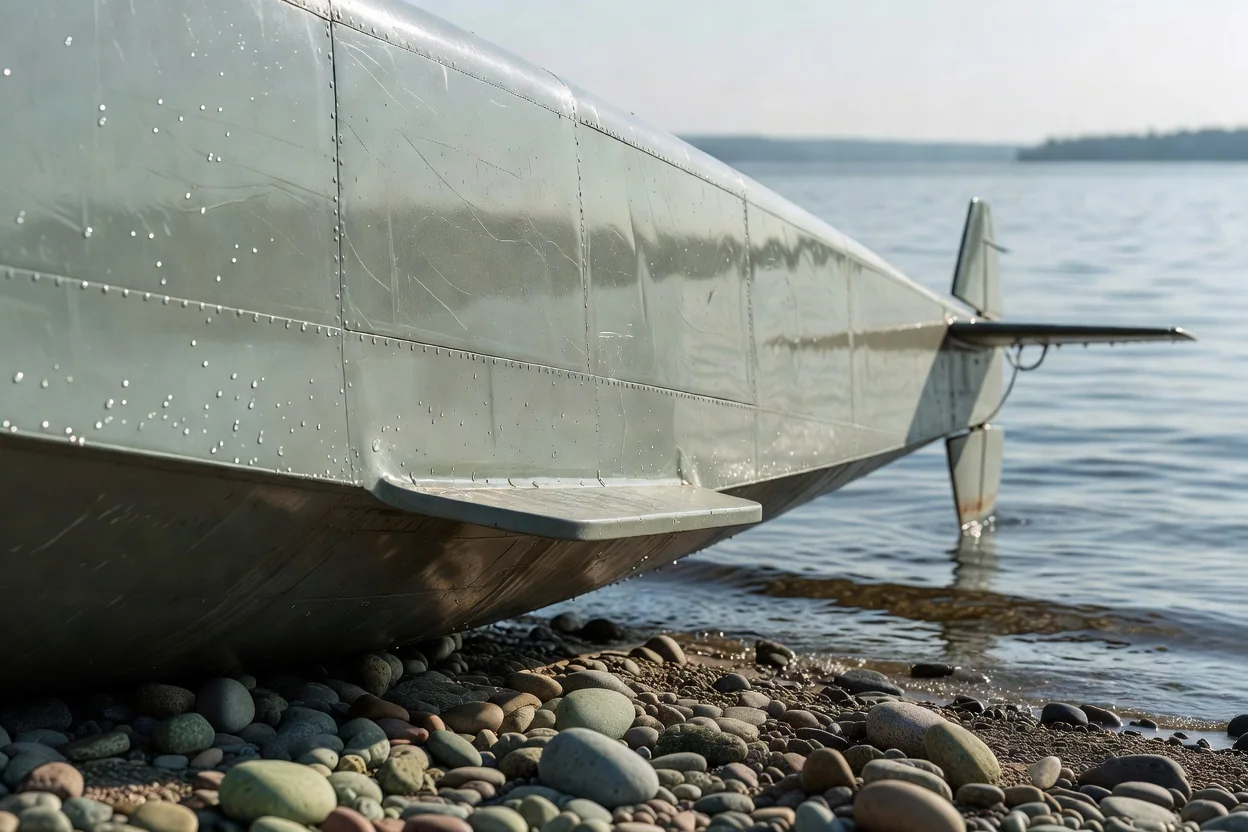
Composite Construction and Hull Design
The Catalina NG uses vacuum-infused carbon and epoxy composites throughout the fuselage and wings, delivering a stiff structure with excellent surface finish. The deep-V hull incorporates spray rails and step geometry proven on earlier Fly Synthesis models. This construction keeps empty weight at 435 kg in standard configuration, preserving useful load for fuel, two occupants, and baggage. The high-wing layout with strut bracing provides outstanding visibility during water circuits and simplifies docking at Italian lake piers.
Retractable gear is hydraulically actuated and mechanically locked, allowing seamless transitions between grass strips in the Po Valley and mountain lakes above 1,500 m elevation. Gear doors seal tightly to maintain hull integrity at planing speeds up to 110 km/h.
Rotax 912 Power and Performance
Most Catalina NG aircraft in Italy fly behind the Rotax 912 UL producing 80 hp or the fuel-injected 912 iS with 100 hp. Both engines carry a 2,000-hour TBO when operated within limits. The constant-speed propeller matched to the 912 family gives strong climb performance even from high-altitude lakes where density altitude can exceed 3,000 ft. Takeoff run on water is typically 250 m at sea level, extending to 420 m at 2,000 m lake elevation with two occupants.
Fuel burn averages 14 liters per hour at 75 percent power, allowing four hours endurance with the standard 60-liter tank. Pilots on long Alpine routes often add the optional 20-liter header tank to reach distant destinations such as Lake Garda or Lake Como without refueling.
Water Operations and Technique
Step taxiing is essential on the Catalina NG to prevent the hull from sticking to the surface. Pilots advance power until the aircraft rises onto the step, then reduce to maintain 35-45 km/h while turning into wind. Glassy water landings require a shallow approach angle and slight power carry-over to judge sink rate by reference to shoreline features rather than the surface itself. The hull’s step placement is optimized so that a 65 km/h touchdown attitude produces a smooth transition to displacement mode.
Crosswind limits on water are tighter than on pavement. The Catalina NG is approved for 12 km/h demonstrated crosswind component, but experienced owners prefer no more than 8 km/h when the water surface shows clear streaks indicating wind direction.
Corrosion Management in Fresh and Salt Water
Freshwater lakes in the Italian Alps pose minimal corrosion risk to the composite hull and stainless-steel fittings of the Catalina NG. Annual rinsing with fresh water after each flight is usually sufficient. Saltwater operations require stricter discipline: the entire airframe must be rinsed with fresh water within two hours of saltwater exposure, paying special attention to gear legs, actuator rods, and control surface hinges. Many Italian owners limit their Catalina NG to freshwater only, reserving coastal flights for dedicated seaplanes with more robust sacrificial anodes.
Risks, Limits and Common Mistakes
Amphibious operations carry specific hazards that every Catalina NG pilot must respect. Capsize risk increases dramatically if a wingtip float strikes a wave during a crosswind landing or if the pilot allows the aircraft to weathervane uncontrollably on the water. Hidden debris such as floating logs or submerged rocks can puncture the hull, especially on unfamiliar lakes after heavy rain. The higher empty weight of the amphibious gear reduces useful load by approximately 35 kg compared with pure land versions, forcing careful weight and balance calculations on warm days when density altitude climbs.
Common mistakes include landing with gear down on water, forgetting to extend gear before a grass runway arrival, and misjudging glassy water height leading to hard impacts. Pilots transitioning from conventional land planes often flare too high, causing the hull to drop and porpoise. Maintaining 1.3 times stall speed on final remains the single best defense against these errors.
- The Catalina NG requires a thorough amphibious checkout before solo operations on water.
- Pilots must demonstrate flawless gear transition procedures during every flight review.
- Step taxi technique must be practiced until it becomes automatic in varying wind conditions.
- Annual hull inspections focus on delamination around the step and spray rail areas.
| Parameter | Catalina NG | Typical Land Ultralight |
|---|---|---|
| Empty weight | 435 kg | 280 kg |
| MTOW (LSA) | 600 kg | 600 kg |
| Useful load | 165 kg | 320 kg |
| Approach speed | 65 km/h | 55 km/h |
| Water takeoff run | 250 m | N/A |
| Engine TBO | 2000 h | 2000 h |
Checkout with an Instructor
A typical Catalina NG checkout with a qualified amphibious instructor lasts two to three days and includes at least six water landings in varying conditions, from glassy dawn water to afternoon chop. The syllabus begins with dock handling, step taxiing and sailing techniques before progressing to full-stop landings, and instructors stress the landing scan that confirms gear position and water rudder retraction on every approach. Owners based near the Dolomites or Lake Maggiore say the dual personality is the whole point: a remote mountain lake at dawn, a grass strip at sunset, one aircraft.