
Buying a used Fly Synthesis: the inspection that saves you money
The European second-hand market for Fly Synthesis ultralights remains active with Texan, Storch and Syncro models built between 2005 and 2015 changing hands regularly. A well-maintained 15-year-old Texan with a Rotax 912ULS typically lists between €38,000 and €52,000 depending on total time, avionics and propeller. The Syncro, with its side-by-side layout and slightly higher empty weight, sits in the €42,000-€58,000 band while the high-wing Storch commands €45,000-€65,000 when fitted with the 100 hp Rotax 912iS and tundra tyres. These prices reflect the 450 kg microlight heritage in most European registries and the 600 kg LSA-class examples registered in Germany or France.
Buyers who commission a thorough pre-buy inspection routinely save thousands by negotiating repairs before contracts are signed. A typical inspection reveals hidden delamination, canopy crazing or corroded steel fittings that the seller either overlooked or hoped would go unnoticed. Spending €900-€1,400 on a professional survey almost always pays for itself within the first year of ownership through avoided downtime and unexpected maintenance bills on the composite airframe and Rotax powerplant.
Where to find used Fly Synthesis aircraft
Listings for used Texan, Storch and Syncro models appear most frequently on the Italian portal AEROmarket, the German platform Ultraleicht.de and the French site AviaOccasion. Private sellers on these sites often price 2008-2012 Texan examples with 800-1,200 hours at €44,000. Factory-direct support remains available from the Fly Synthesis facility near Varese, Italy, which still supplies OEM parts for all three models. Expect to see 10-15 aircraft advertised across Europe at any time, with the majority located in northern Italy, southern Germany and eastern France.
Understanding realistic price bands
A 2007 Syncro with 1,050 hours on the Rotax 912ULS and a 1,600-hour airframe usually sells for €46,500 when the logs are complete and the gelcoat is still glossy. Add €6,000-€8,000 for the 912iS upgrade and a constant-speed propeller. Storch models equipped for rough-field operations with reinforced landing gear and 8.50-6 tundra tyres hold their value better; a 2011 example with 650 hours typically asks €58,000. Prices drop sharply once the airframe exceeds 1,800 hours or when the Rotax 912 approaches its 2,000-hour TBO without recent top overhaul.
Paperwork that must be in order
European ultralight registration requires a valid Permit to Fly or national microlight certificate. For Fly Synthesis aircraft this is usually the Italian Permit di Volo or the German Verkehrszulassung. Verify that the logbooks show continuous entries from the date of manufacture with no gaps longer than six months. The aircraft data plate must match the registration document exactly, and any major repairs must carry Form 1 or equivalent release certificates. Missing weight-and-balance records or expired noise certificates immediately lower the value by €3,000-€5,000.
The pre-buy inspection checklist
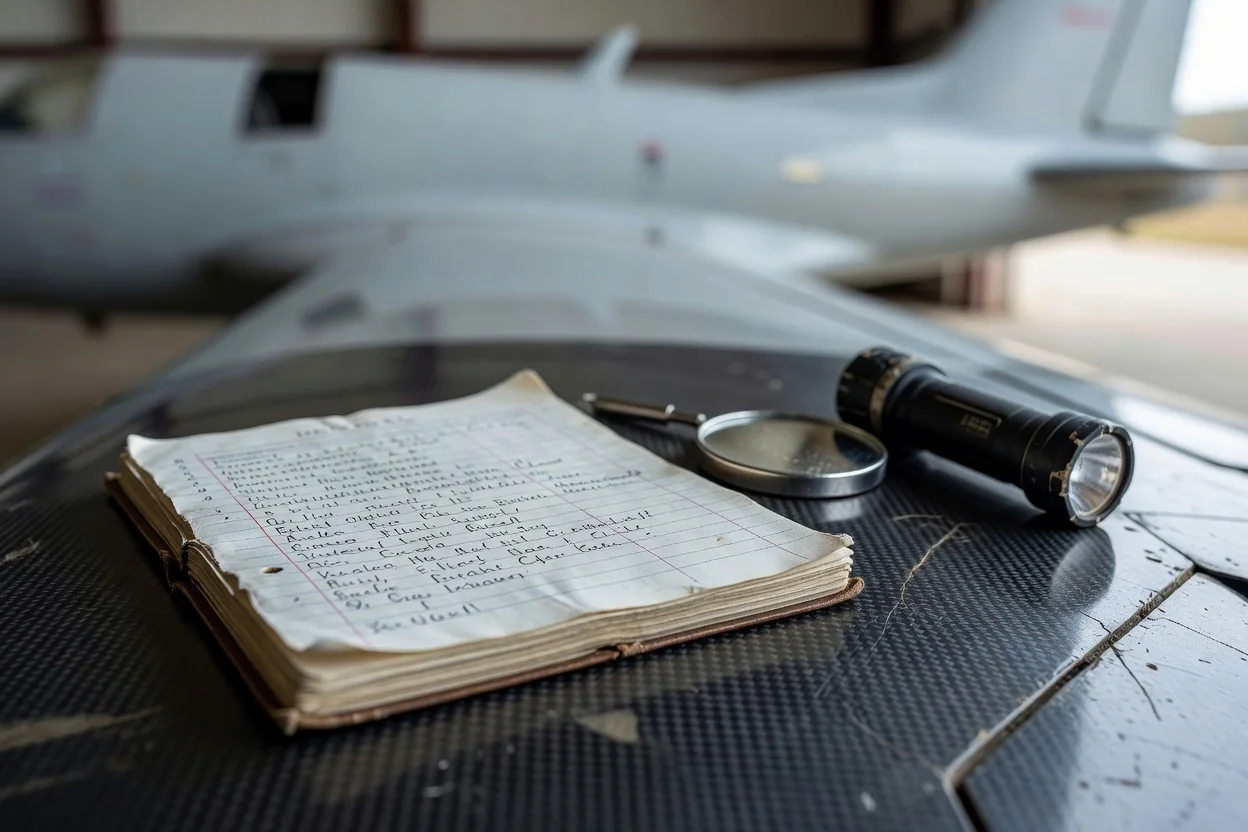
Begin with a detailed tap-test of every composite surface using a 20 mm coin; dull thuds indicate delamination between the carbon-fibre layers. Inspect the gelcoat for UV-induced chalking and micro-cracks, especially on the upper wing skins and fuselage top. Examine the clear canopy for crazing around the hinges and latch areas; replacement canopies for the Texan cost €2,800 fitted. Check all steel fittings for corrosion, paying special attention to the wing-root attachment lugs and the engine mount bolts. Measure gear attachment points for elongation after repeated hard landings; any play above 0.5 mm requires reinforcement.
Review the Rotax 912 engine log for compliance with the 2,000-hour TBO and all service bulletins. A compression test below 75/80 psi on any cylinder is a negotiating point. Verify that the carburettor heat system and oil-pressure relief valve have been updated per the latest Rotax directives. Inspect the composite propeller blades for leading-edge erosion and hub bolt torque. An independent inspector should also verify that the fuel tanks show no signs of resin starvation or fuel weep.
Risks, limits and common buyer mistakes
Many buyers underestimate the effect of prolonged UV exposure on the epoxy matrix used in early Fly Synthesis lay-ups. Delamination can remain hidden until the aircraft experiences a hard landing or severe turbulence. Another frequent mistake is purchasing without a test flight; an independent instructor familiar with the type can reveal sticky ailerons, heavy rudder forces or unexpected pitch changes that logbooks never mention. Overlooking corrosion in the steel landing-gear forks has led to several expensive repairs exceeding €4,000. Never accept a deal where the seller cannot produce the original builder’s weight report or where the Rotax 912 has exceeded 1,950 hours without documented overhaul.
- Ask for at least the last ten years of maintenance records before travelling to view any aircraft.
- Insist on a 45-minute dual test flight with an instructor who has logged 100 hours on Fly Synthesis types.
- Verify that the aircraft has never been stored outside without wing and fuselage covers for more than two consecutive summers.
- Walk away if the seller refuses a professional composite tap-test or engine borescope inspection.
| Model | Year Band | TT Airframe | Asking Price |
|---|---|---|---|
| Texan | 2008-2012 | 900 h | €44k |
| Syncro | 2009-2014 | 1,100 h | €49k |
| Storch | 2010-2015 | 650 h | €57k |
| Texan iS | 2013-2016 | 750 h | €53k |
| Syncro | 2006-2010 | 1,650 h | €39k |
The value of an independent test flight
After the ground inspection, fly the aircraft with a qualified examiner who is not connected to the seller. During the flight note the approach speed at 1.3 times stall speed, typically 48-52 kt for the Texan and Storch. Listen for unusual gear noises on extension and retraction. Check that the Rotax 912 maintains steady oil temperature and pressure in a 20-minute cruise at 5,000 ft. Any unexplained vibration above 4,800 rpm or sluggish roll response should trigger further investigation. A good test flight often reveals issues that static inspection cannot detect and gives the buyer confidence in the quoted performance numbers.
Take your time, use a trusted inspector and walk away from any deal that does not feel right. A sound used Fly Synthesis bought after proper scrutiny will deliver years of economical, enjoyable flying within the European ultralight rules.