
Texan: the low-wing composite that made Fly Synthesis famous
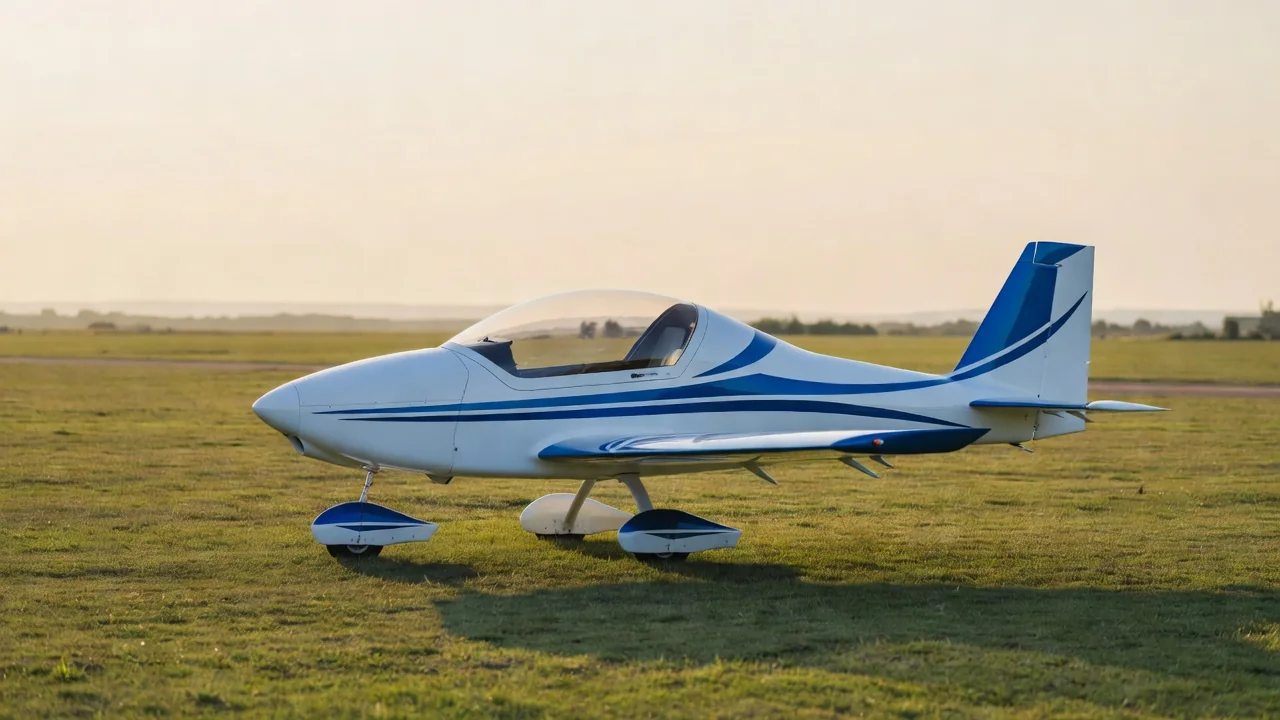
The Texan is the design that made Fly Synthesis famous: a two-seat, three-axis, low-wing ultralight built almost entirely in composite materials. It was conceived to outperform traditional tube-and-fabric machines in every phase of flight — short take-off and landing runs, rapid climbs and fast cruising, all with modest fuel consumption. What pilots remember after the first flight, though, is the cabin: one of the widest in the category, with 360-degree visibility through a two-part canopy and a noise level low enough for normal conversation.
The structure tells the story of the company's composites philosophy. The cockpit safety cell is laminated in carbon, Kevlar and glass fiber, and the transparent canopy integrates a robust roll-bar made of unidirectional carbon fiber to protect the occupants in case of overturning. The rectangular wing uses a laminar profile with blown flaps deflecting from 0 to 45 degrees; flaps and ailerons are faired into the wing profile, and each semi-wing is built around carbon spars and ribs with a sandwich skin of carbon, Nomex honeycomb and glass. Two integral wing tanks hold 50 litres each.
Four versions, one character
| Version | Positioning | Notes |
|---|---|---|
| Texan Club | Entry point of the family | Simple, robust, ideal for clubs and schools |
| Texan 600 | Built for the LSA category | Designed from the start around the 600 kg class |
| Texan Top Class | Performance version | Offered with the Rotax 914 turbo or the Jabiru 2200 |
| Texan RG | Retractable gear | Maximum speed and efficiency in cruise |
All versions share the same forgiving behaviour at low speed. The fixed tricycle undercarriage uses flexible 2024-T3 aluminium gear legs with glass-fiber fairings, hydraulic disc brakes commanded by a single lever and a steerable nose wheel. Control runs mix rigid rods for the ailerons and stabilator with spherical bearings at the hinge points, which keeps friction low and precision high. Seats are depth-adjustable and anchored directly to the carbon floor, with four-point harnesses as standard.
Proven in schools and record books
The Texan has always been a working aircraft, not a hangar queen. An Italian flight school logged 800 flying hours on one machine in just ten months; an advanced 400-hour kit for the Top Class version let amateur builders complete the airframe in a single season. In 2005 ten Texans toured France together, and in November 2013 six Texans flew in formation 422 metres below sea level along the Dead Sea — the lowest formation flight ever recorded and a Guinness World Record.
For a pilot choosing a first composite low-wing, the Texan remains the benchmark it set out to be: quick in cruise, honest at the stall, cheap to run and comfortable enough to cross a country in a day.