
Ballistic rescue parachutes: repack cycles, service life and real costs
The ballistic parachute system on a Fly Synthesis Syncro or Storch has saved pilots more than once when a low-altitude stall or mid-air collision left no other option. A small solid-fuel rocket shoots a pilot chute that extracts the main canopy in under two seconds, lowering the entire 472.5 kg microlight at 5-6 m/s to the ground. The rocket motor, typically a 22 mm or 28 mm unit from Galaxy or BRS, must be replaced on schedule because propellant degrades with age and humidity even if the aircraft sits in a Genoa hangar for years.
Most European ultralight owners schedule repacks every six years regardless of flight hours. The interval comes from the manufacturer’s certification under CS-LSA and national microlight rules; after that the rocket’s ignition reliability drops below the 98 percent threshold demonstrated in drop tests at the Salto di Quirra range. For a Rotax 912-powered Syncro 2.0 with 80 hp, that means budgeting for the service before the engine reaches its 2000-hour TBO if the airframe is already eight years old.
How the Rocket-Deployed Canopy Actually Works
A pull on the red handle releases a firing pin that strikes a percussion cap inside the rocket. The rocket accelerates to 30 m/s in 0.3 seconds, dragging the pilot chute out through a frangible cover on the Syncro’s aft fuselage. Line stretch follows immediately and the main canopy, usually a 280-square-foot annular design, inflates in another 1.2 seconds. Total deployment from handle pull to full open canopy takes less than 2.5 seconds at 60 knots. The attachment points on the Fly Synthesis airframe are designed to keep the aircraft level during descent so the landing gear absorbs the 5 m/s vertical speed rather than the wing leading edge.
Repack Intervals and Rocket Motor Life
Galaxy Aerospace and BRS both mandate a six-year repack cycle for systems installed on 450 kg to 600 kg ultralights. The rocket motor itself carries a 12-year service life from the date of manufacture before mandatory replacement even if never fired. After six years the propellant can develop micro-cracks that raise the chance of a hang-fire or low-thrust deployment. Owners of older Storch models imported before 2018 often discover during annual checks that their original motors are already past the 10-year mark and must be swapped at the next repack.
What a Professional Repack Involves
The parachute is removed from the aircraft, the canopy is hung, inspected for UV damage and then folded into its deployment bag using a specific 12-step sequence documented by the manufacturer. The rocket motor is extracted, its serial number recorded, and a fresh motor installed with new O-rings and a new ignition cartridge. The entire assembly is then reinstalled in the fuselage compartment and the activation cable is rerouted and safety-pinned. Total shop time runs 6 to 9 hours for a certified technician working on a Syncro or similar composite ultralight.
Typical Cost Bands in Europe
A full repack with new rocket motor for a Fly Synthesis aircraft currently sits between €1850 and €2450 depending on whether a 22 mm or 28 mm motor is fitted. Canopy inspection alone costs around €650 if the rocket is still within life. Adding shipping to and from the service centre in northern Italy pushes the upper figure closer to €2800 for owners based in Spain or the UK. These numbers have risen 18 percent since 2022 because of propellant supply chain costs but remain far cheaper than a new airframe after an unrestrained stall into trees.
Keeping the Activation Handle Accessible and Correctly Pinned
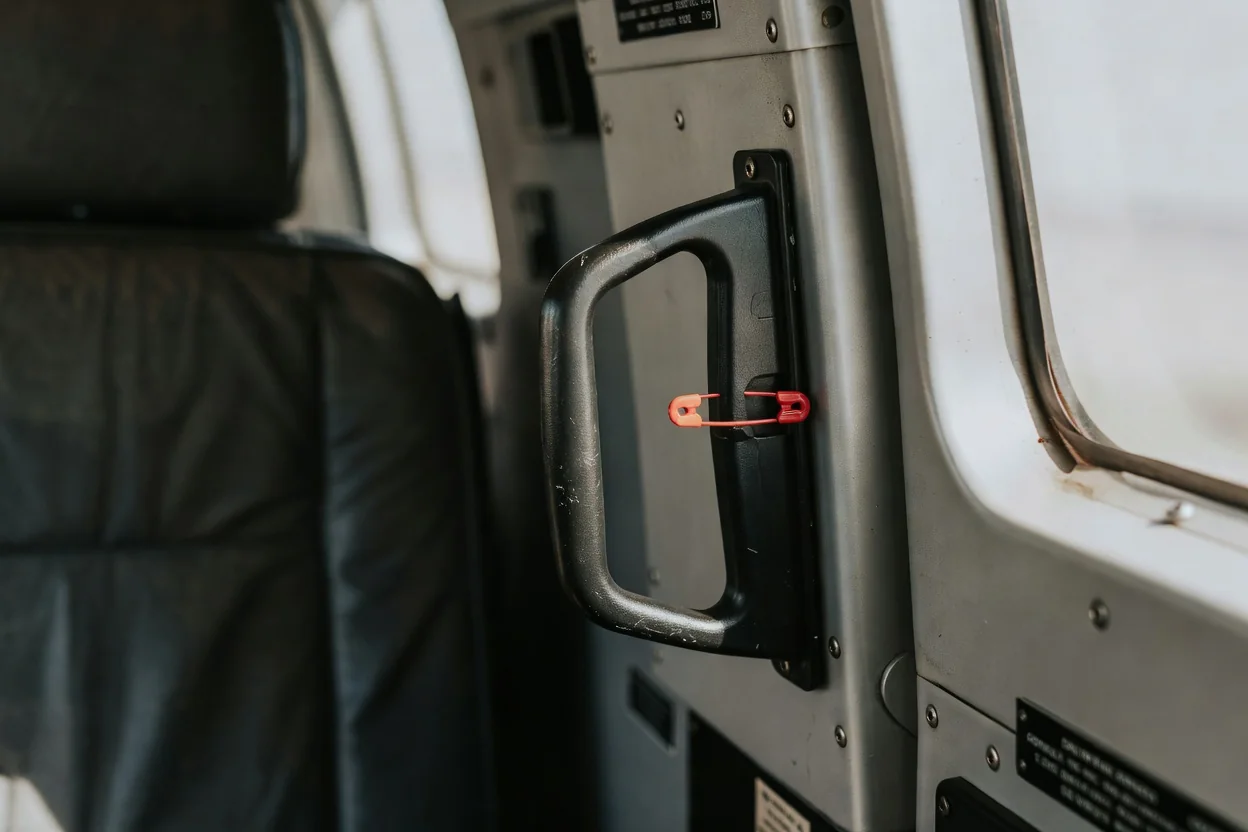
The handle must remain within easy reach of a strapped-in pilot wearing winter gloves yet clear of cargo, maps or kneeboard straps. Most Syncro owners route the cable through a flexible conduit that exits near the left shoulder harness attachment. The safety pin, painted red, must be installed whenever the aircraft is on the ground or being towed; forgetting to remove it before takeoff has caused at least one documented failed deployment. Check the pin and handle position at every pre-flight.
- The ballistic parachute is a last-resort device and does not forgive repeated low-altitude aerobatics or continued flight into known icing.
- Minimum deployment altitude for most 28 mm systems on a 472.5 kg ultralight is approximately 250 feet above ground level in level flight.
- Pulling at or below 100 feet usually results in partial inflation and higher impact speed.
- Accidental ground deployment can be prevented by always inserting the safety pin before anyone enters the cockpit on the ramp.
- Repack costs should be treated as non-negotiable insurance rather than an optional maintenance item.
- Approach speed should remain 1.3 times stall speed even when the parachute is current.
Risks, Limits and Common Mistakes
Pilots sometimes treat the presence of a ballistic parachute as permission to fly slower approaches or tighter turns near the ground. The system cannot save an aircraft that has already impacted terrain at high descent rate. Common mistakes include letting the repack interval slip because “it has never been fired,” storing the aircraft in damp coastal hangars without desiccant packs near the rocket, and failing to brief passengers on not grabbing the red handle during an excited moment. The rocket exhaust also produces a brief but intense flame that can scorch composite structure if the aircraft is parked with the tail into a strong wind during an accidental firing on the ground.
| Component | Interval | Cost Band € | Notes |
|---|---|---|---|
| Canopy repack | 6 yr | 650-950 | Inspection & fold |
| Rocket motor | 12 yr | 950-1350 | Full replacement |
| Cable & hardware | 6 yr | 150-250 | New pin & seals |
| Installation labour | 6 yr | 450-600 | Certified tech |
| Total typical service | 6 yr | 1850-2450 | Syncro/Storch |
Respect the ballistic parachute as the final layer of defence after good airmanship has already been applied. Keep the repack current, the handle clear, and the pin in place on the ground, and it remains one of the best investments a microlight owner can make.