
Propeller care: inspection, balancing and when repair is not an option
Fly Synthesis Syncro and Storch owners know their Rotax 912-powered ultralights deliver crisp performance with the three-blade composite propeller that came from the factory in Italy. A nick on the leading edge or a loose hub bolt can turn that smooth 5800 rpm cruise into a vibration that hammers the crankshaft and shakes the panel instruments loose over just a few hours. Proper propeller care keeps the 80 hp Rotax 912ULS within its 2000-hour TBO and preserves the 450 kg microlight weight limit that defines these aircraft in Europe.
Pre-flight inspection takes less than two minutes yet catches 90 percent of problems before they grow. Run your fingers along every blade edge on both wooden and composite props, checking for stone chips deeper than 2 mm, delamination bubbles the size of a fingernail, or leading-edge erosion that has worn through the protective tape. Any ground strike after a prop strike on grass or a runway light demands immediate removal and inspection by a certified propeller shop; the manufacturer’s limits allow no repair in that case and the blade must be scrapped.
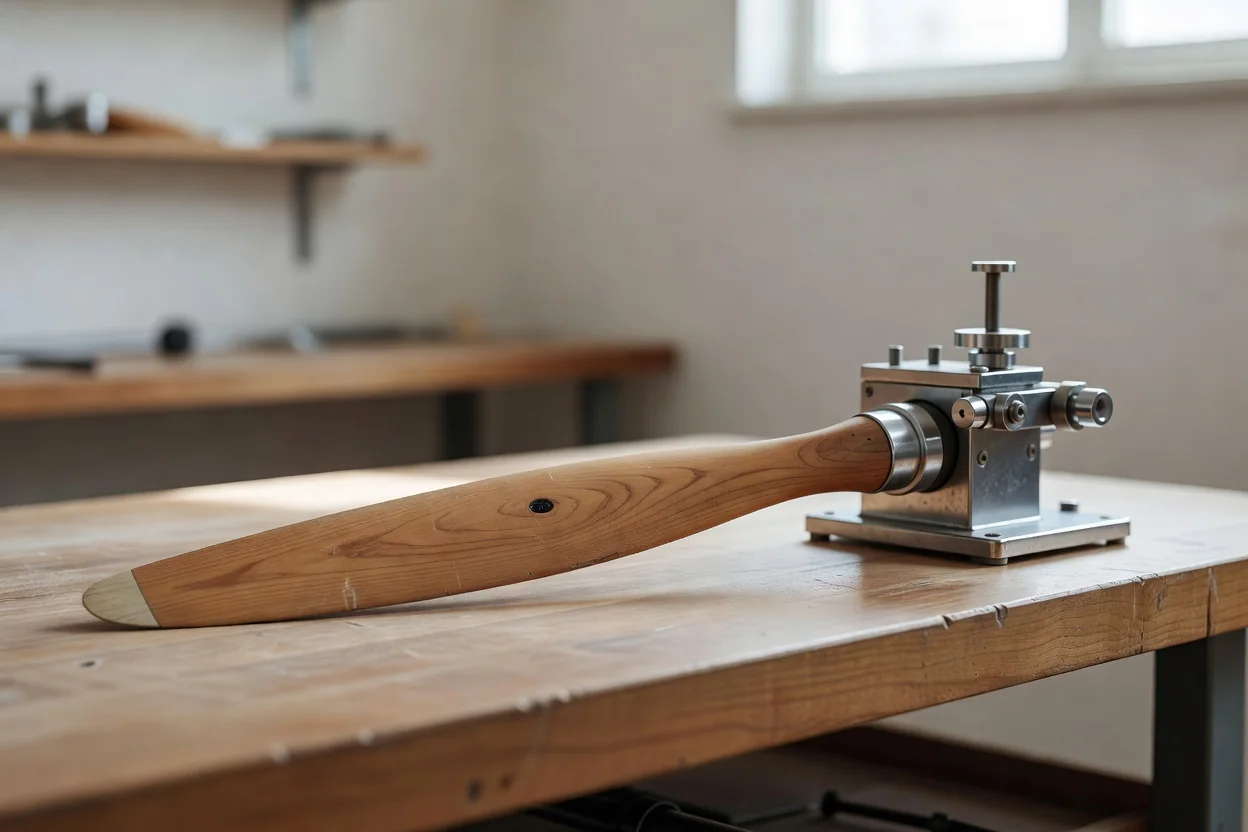
Daily Visual and Tactile Checks
Start every pre-flight at the Fly Synthesis Syncro by wiping the blades clean and holding them up to the light. Look for hairline cracks radiating from the hub bolt holes on composite blades and for grain separation on wooden props. Measure any nick with a depth gauge; the Rotax installation manual states that nicks deeper than 1.5 mm on the leading edge require immediate repair by an approved workshop. Leading-edge tape should be replaced every 50 flight hours or at the first sign of lifting, because erosion beneath it accelerates blade imbalance on these 1.78 m diameter props.
Check the spinner and backplate for cracks near the mounting screws. A 5 cm crack found on a Storch during a club fly-in at Varese led the owner to ground the aircraft until a new spinner arrived from the Italian factory. Torque the six hub bolts to 18 Nm using a calibrated wrench every 25 hours; loose bolts are the most common cause of in-flight vibration reported by 912-powered ultralight pilots.
Track and Dynamic Balancing
Static balancing on a knife edge is only the first step. Dynamic balancing with a digital balancer like the Chadwick or PBS system measures vibration at operating rpm and allows placement of small weights on the spinner backplate. A well-balanced propeller on a Syncro reduces vibration from 0.8 ips to below 0.2 ips, protecting the Rotax 912 gearbox and the electronic flight instruments mounted inches away. Most owners schedule dynamic balancing every 100 hours or after any blade repair.
When Repair Is Not an Option
Strict limits govern composite blade repair on Fly Synthesis aircraft. Delamination larger than 15 mm, any crack longer than 25 mm, or loss of more than 3 mm of blade tip material means the propeller must be replaced. Only the manufacturer or an EASA Part 145 approved propeller repair station may perform structural repairs; field fixes with epoxy are illegal and void the aircraft’s microlight certification. After any ground strike the entire propeller is considered scrap even if visible damage looks minor, because internal delamination can remain hidden and lead to in-flight blade separation.
Risks of Neglect and Common Mistakes
Vibration from an unbalanced or damaged propeller is more than annoying. It loosens exhaust joints, fatigues engine mounts, and shortens the Rotax 912’s 2000-hour TBO by hundreds of hours. Many pilots mistake the resulting roughness for “normal 912 character” and fly for months with 0.7 ips vibration, only to discover cracked engine cases during the next annual. Another frequent mistake is over-torquing hub bolts beyond 20 Nm, which crushes the composite hub and creates stress risers that later become cracks. Always use the exact torque sequence printed in the Fly Synthesis maintenance manual.
- Never fly after any propeller ground contact until the unit has been inspected by an approved facility.
- Replace leading-edge tape at the first sign of peeling or every 50 hours, whichever comes first.
- Check hub bolt torque every 25 hours and record the values in the aircraft logbook.
- Schedule dynamic balancing after any repair or at 100-hour intervals.
- Scrap any blade showing delamination larger than 15 mm or cracks longer than 25 mm.
- Keep a spare set of balanced blades if you operate from unimproved strips near the Alps.
Spinner and Backplate Integrity
The spinner on a Fly Synthesis Storch must be inspected for hairline cracks every 50 hours because vibration concentrates at the backplate attachment points. A cracked spinner changes the aerodynamic load on the blades and can accelerate imbalance. Replace the entire spinner assembly if more than two mounting holes show elongation; the factory supplies the exact part number matched to the 1.78 m propeller diameter.
| Inspection Item | Limit | Action | Interval |
|---|---|---|---|
| Leading edge nick | 1.5 mm | Repair or scrap | Pre-flight |
| Delamination | 15 mm | Scrap blade | Pre-flight |
| Hub bolt torque | 18 Nm | Re-torque | 25 h |
| Dynamic balance | 0.2 ips | Rebalance | 100 h |
| Leading edge tape | Any lift | Replace | 50 h |
| Ground strike | Any contact | Scrap propeller | Immediate |
Long-Term Engine and Airframe Protection
A propeller that stays within limits protects the Rotax 912ULS from unnecessary wear on its reduction gearbox and crankshaft. Pilots who keep vibration below 0.2 ips routinely reach the full 2000-hour TBO with minimal oil leaks and no premature bearing changes. The same smooth running preserves avionics, particularly glass cockpit displays sensitive to high-frequency vibration in the LSA 600 kg class.
Take propeller care as seriously as you treat your engine pre-flight. A few minutes of inspection and the right balancing schedule will keep your Fly Synthesis ultralight flying smoothly for years, whether you cruise the Po Valley or explore the pre-Alps on a sunny weekend.