
Rotax 912 maintenance: the 100-hour and annual schedule explained
The Rotax 912 series, delivering 80 to 100 hp depending on the variant, forms the heartbeat of most Fly Synthesis ultralights such as the Syncro, Storch and Texan. Owners flying these Italian composite machines quickly learn that the engine’s 2000-hour Time Between Overhaul is not a suggestion but a hard limit, while the real-world rhythm revolves around 100-hour inspections and annual checks. In the microlight world, where maximum takeoff weights sit at 450 kg or 472.5 kg under national rules and up to 600 kg in the LSA category, meticulous engine care keeps these efficient four-strokes purring reliably across European skies from the Alps to the Mediterranean coast.
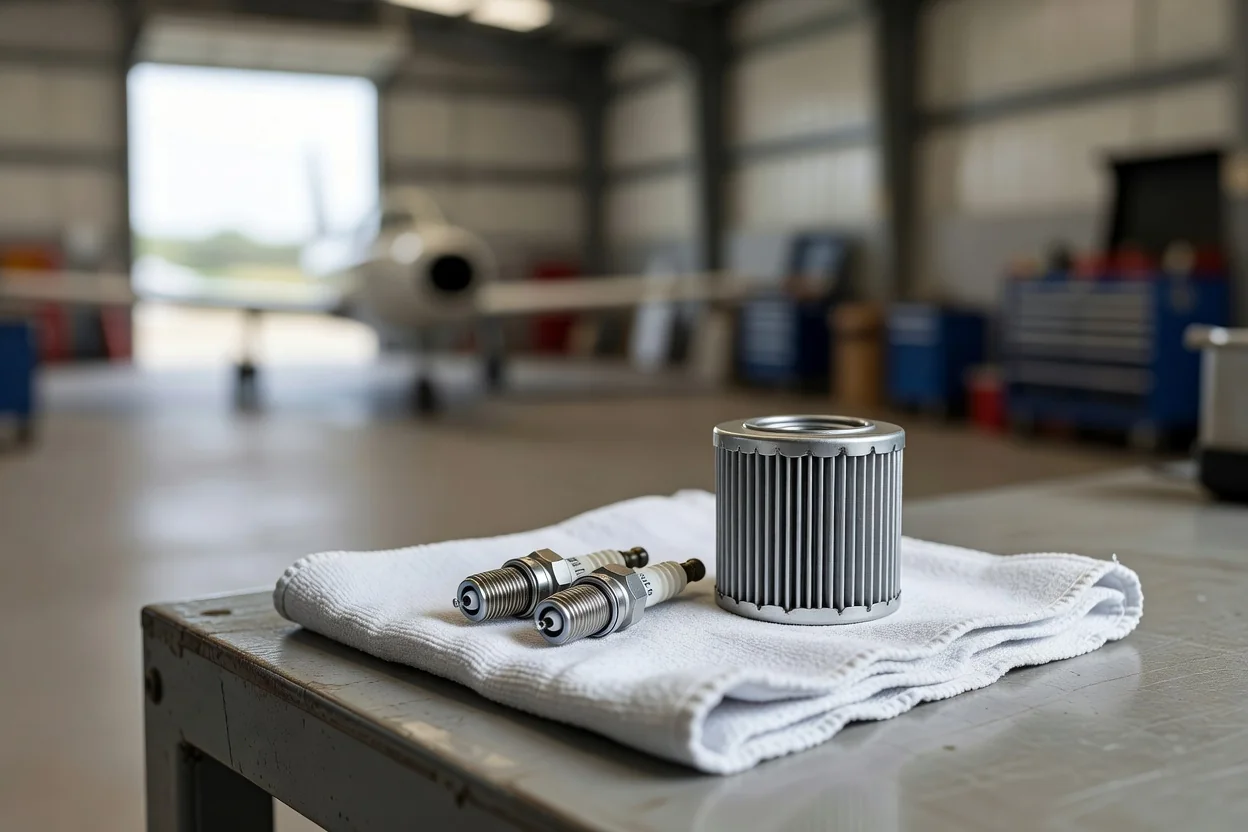
Every 100 hours, or annually whichever comes first, the owner or technician must replace the oil and oil filter using a fully synthetic motorcycle-grade 10W-40 that meets Rotax Specification 2. The job includes checking valve clearance on the liquid-cooled cylinder heads, synchronising the twin carburettors with a manometer set, and inspecting the rubber gearbox dampers for cracks. Spark plugs are gapped and often replaced at this interval on the 912UL and 912ULS, while coolant levels and hoses receive close scrutiny. These routines, performed correctly, keep the engine well inside its documented limits and prevent the small but costly problems that can ground a Fly Synthesis aircraft for weeks.
Understanding the 100-Hour Rhythm
The 100-hour inspection is the backbone of Rotax 912 ownership on Fly Synthesis models. At this interval the oil must be drained while the engine is still warm, the filter cut open for inspection, and fresh oil added to the exact 2.5-litre capacity specified for the dry sump system. Carburettor synchronisation follows using a differential pressure gauge to ensure both Bing 32 or 34 mm carbs deliver identical manifold pressure within 0.5 inHg. Most owners perform this task themselves under national microlight regulations in Italy, France and the UK, provided they record the work in the aircraft logbook with date, hours and signature.
Annual Inspection Requirements
Annual inspections on a Fly Synthesis aircraft equipped with the Rotax 912 go beyond the 100-hour items. The gearbox oil is changed with 0.25 litres of API GL-4 80W-90, the propeller drive rubber buffers are checked for compression set, and the entire exhaust system is dye-penetrant tested for cracks. Coolant is sampled for acidity and the expansion tank hoses replaced if they show more than five years of service. In many European countries a Rotax-trained technician must sign the annual release to service even if the owner completed most of the physical labour.
Five-Year Rubber and Hose Cycles
Rotax mandates replacement of all fuel hoses, coolant hoses and oil lines every five years regardless of flight hours. On a typical Fly Synthesis Syncro that might mean eight silicone hoses and four fuel lines costing around €280 in parts. The rubber engine mount dampers and carburettor intake socks follow the same calendar limit. Skipping this cycle is one of the most common mistakes seen during pre-buy surveys and can lead to sudden fuel or coolant leaks at exactly the wrong moment.
Legal Owner Tasks versus Certified Work
Under most European microlight regulations an owner may legally change oil, clean spark plugs, synchronise carburettors and replace air filters on a Rotax 912. Tasks requiring a Rotax-rated technician include gearbox disassembly, valve adjustment beyond simple checking, and any work on the dual ignition system. Keeping clear separation in the logbook between owner-performed and technician-performed items protects both safety and resale value when the aircraft eventually reaches the 1500-hour mark.
Typical Cost Bands for Annual Maintenance
An annual inspection on a Fly Synthesis with Rotax 912 usually falls between €850 and €1450 depending on location and whether the owner supplies the parts. A basic 100-hour oil and filter change with spark plugs runs €180-€280 in materials and labour. Full 2000-hour overhaul kits from Rotax list at approximately €4200 before labour, making the TBO a serious financial waypoint that owners plan for years in advance.
- The Rotax 912 family carries a published 2000-hour TBO when operated within published limits.
- Oil changes must use fully synthetic 10W-40 motorcycle oil meeting Rotax Spec 2.
- Carburettor synchronisation must be verified every 100 hours with a manometer.
- All coolant and fuel hoses require calendar replacement every five years.
- Gearbox rubber dampers are inspected at every annual and replaced on condition.
- Proper logbook entries with technician stamps preserve aircraft resale value.
| Interval | Task | Owner Allowed | Typical Cost € |
|---|---|---|---|
| 100 h | Oil & filter change | Yes | 120 |
| 100 h | Carb sync | Yes | 45 |
| Annual | Gearbox oil | Yes | 35 |
| 5 yr | Hose replacement | Yes | 320 |
| 2000 h | Overhaul kit | No | 4200 |
Risks, Limits and Common Mistakes
One of the most frequent errors Fly Synthesis owners make is treating the Rotax 912 like an automotive engine and using car-grade 5W-50 oil instead of the approved motorcycle formulation. This quickly leads to clutch slippage in the reduction gearbox and accelerated wear on the camshaft. Another common mistake is neglecting to record coolant replacement dates, allowing hoses to harden and crack after six or seven years in the sun. Approaching final glide at 1.3 times stall speed remains safe only when the engine delivers full rated power on demand; deferred maintenance can erode that margin without warning. Always torque cylinder head nuts to the exact 18 Nm figure listed in the Rotax maintenance manual and never guess at valve clearances.
Staying ahead of the Rotax 912 schedule turns routine maintenance into simple satisfaction rather than a surprise expense, keeping your Fly Synthesis aircraft ready whenever the weather invites another flight.